Solitaire Classic Klondike
- 4.7
- Rating
- 1.00M
- Installs
- Free
- Price
 Analysis by App-foxy
I approached Solitaire Classic Klondike as the kind of card game I could open for a few quiet minutes rather than as a large, feature-heavy mobile title. That expectation turned out to be important. This is a focused Klondike solitaire game from Wood Puzzle Sudoku Games, and its appeal comes from keeping the familiar card layout at the center instead of surrounding it with a complicated progression system.
For someone trying solitaire on a phone for the first time, the basic promise is easy to understand: arrange the cards, uncover what is hidden, and build each suit from the ace upward. The game is free, rated for Everyone, and available for devices running Android 6.0 or later. Its current version is 1.7.3, so it is aimed at a broad range of Android users rather than only people with recent hardware.
My overall impression is positive, especially if you already enjoy traditional Klondike and want a straightforward digital version. I would not choose it for a player looking for a deep campaign, competitive multiplayer, or a large collection of unrelated card games. I would choose it when I want a familiar puzzle that lets me think at my own pace and stop after a single hand.
You May Also Like

 Blood Strike: 2.5 Anniversary
Blood Strike’s Loadouts Turn Every Drop Into a Tactical Gamble
A close look at Blood Strike’s custom loadouts: how fast access to signature weapons reshapes its battle royale rhythm, rewards preparation, and narrows the gap between fights.

 Pandora - Music & Podcasts
Pandora’s Music Is Easy to Start, but Harder to Recover
Pandora’s strength is its low-effort path from a seed to a station. Its weak spot is how much confidence it asks you to place in connection, setup, and quiet recovery.

 8 Ball Pool
 Is Built on Rivalries, Rematches, and Routine
A close look at the rivalries, rematches, shared routines, and unanswered safety questions that turn a quick pool match into a persistent mobile community.

 Samsung Music
’s Quiet Strength Is Playing What You Already Own
Its reach comes less from spectacle than from dependable access to a personal library. That simplicity is both the app’s strongest retention engine and its ceiling.

 AccuWeather: Weather Radar
AccuWeather Review: A Quick, Clear Forecast for Everyday Decisions
For everyday plans, the best forecast is the one you can understand quickly. AccuWeather makes rain timing, radar, and local conditions easy to act on, with a few trade-offs.

 Hill Climb Racing
Why Hill Climb Racing Still Turns Crashes Into One More Run
A tiny car, a bumpy hill and one more upgrade: Hill Climb Racing keeps resurfacing because its simple chaos makes every near-miss feel personal.
More From Our News Desk
View All News


What to expect when you open the game
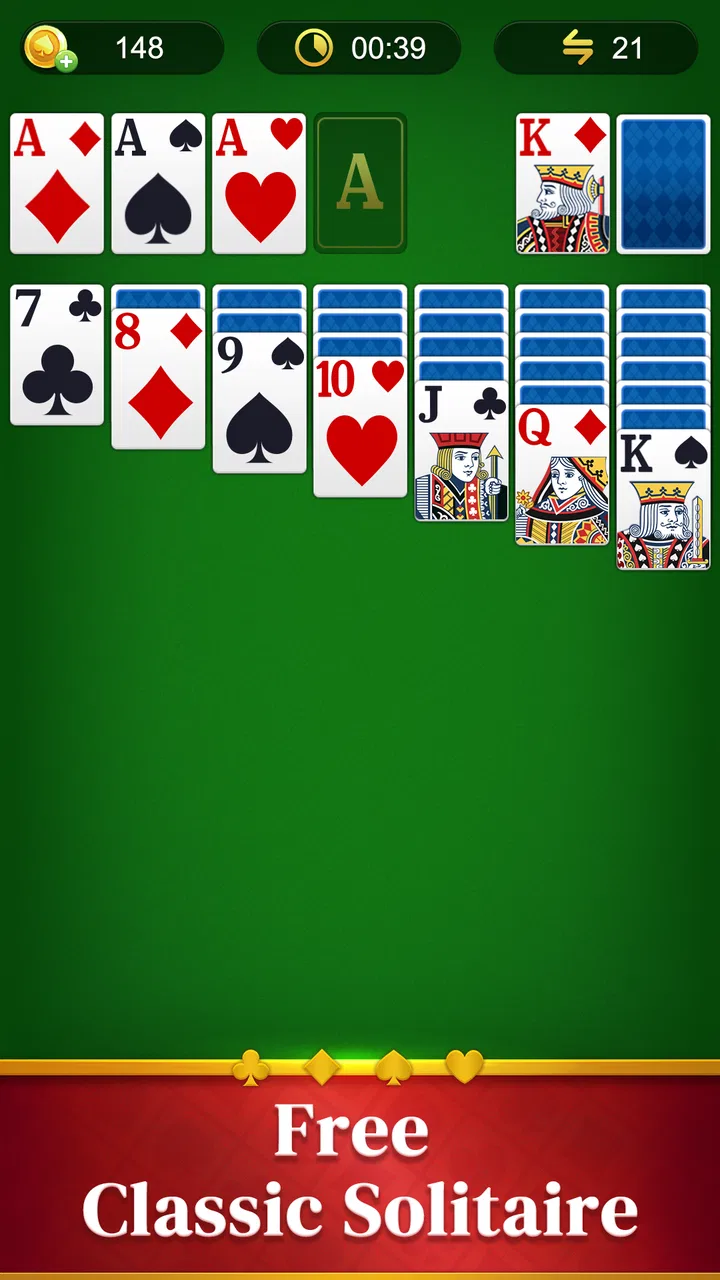
The first useful thing to know is that this is a classic card experience, not a reinvention of solitaire. The layout asks you to work through the tableau, reveal face-down cards, and move cards into the foundation piles in suit order. That sounds simple, but the challenge comes from deciding which move helps immediately and which move keeps future options open.
I found that the game works best when I treat every hand as a small planning exercise. Moving a card because it fits can be tempting, yet a legal move is not always a good move. For example, placing a black card on a red card may free a space, but it can also block the sequence you need later. The satisfying moments come from uncovering a hidden card or opening a vacant column at exactly the right time.
The store presents the game as relaxing and addictive, and that description fits the rhythm more than the difficulty. A hand can feel calm when the available moves are clear, then suddenly require careful attention when several columns depend on one decision. I like that change of pace because it gives the game a little more substance than simply tapping cards in an obvious order.
The title has attracted over a million installs and holds a 4.8 average from around thirteen thousand ratings, with nearly nine hundred written reviews. Those figures suggest that the familiar format has found a substantial audience, but they should not be mistaken for proof that every solitaire player will enjoy it. The right question is whether you want a clean Klondike session or a more elaborate card-game package.
Why the familiar rules still work on a phone
Klondike is especially well suited to touchscreens because each decision is compact. I can inspect the columns, choose a card, and continue without learning a new control scheme. That makes the game comfortable during a short break, while waiting for an appointment, or at the end of the day when I do not want to learn a complicated system.
It is also a good option for a first-time player who knows the name solitaire but has never played seriously. The goal becomes clearer once you remember the two directions of progress: build descending, alternating-color sequences in the tableau, while sending each suit to its foundation in ascending order. The game rewards patience more than fast reactions, so there is no pressure to perform quickly.
That simplicity has a trade-off. Players who expect daily challenges, tournaments, social competition, or a large set of variants may find the experience narrow. A dedicated solitaire game can be more pleasant than a crowded card app, but it cannot satisfy someone who wants a whole collection in one download.
Getting started without feeling lost
Installation should be uncomplicated for compatible Android devices because the game is free and supports Android 6.0 onward. After opening it, I recommend resisting the urge to move the first card that looks available. Spend a few seconds reading the tableau from left to right. Look for face-down cards that can be exposed, empty columns that might become useful, and sequences that could be moved together rather than one card at a time.
A first-time player often makes the same mistake I did when returning to Klondike after a long break: focusing only on the visible top cards. The real objective is to improve the position underneath them. A move that exposes a hidden card is usually more valuable than a move that merely rearranges two already visible cards, although that is not an absolute rule. Sometimes preserving a movable sequence matters more than revealing one card immediately.
The foundation piles deserve a little caution during the opening phase. Sending an ace or a two upward is generally helpful, but pushing every available card into the foundation without considering the tableau can remove a useful color or rank from your working area. I prefer to ask whether the move improves access to hidden cards before committing to it.
Another practical habit is to identify the cards that are currently blocking progress. If a column contains a face-down card beneath a small run, the best move may be to relocate that run even when it does not create an immediate foundation move. This way of looking at the board turns the hand from a search for any legal tap into a search for the move that changes the position most.
Your first meaningful success
For a beginner, the first meaningful success does not have to be winning an entire hand. It can be uncovering a hidden card through a deliberate sequence of moves. That small achievement shows that the game is about creating access, not just matching cards by color and rank.
Here is the approach I would suggest. First, check whether any ace can move to a foundation. Next, see whether a two can follow an available ace without damaging the tableau. Then look for descending, alternating-color moves that expose a face-down card. If an empty column appears, remember that it is valuable because only a king, or a sequence beginning with a king, can occupy it in standard Klondike play.
When I play on a phone, I try to make one clear objective for the next few moves: open a column, reveal a hidden card, or build a foundation safely. This prevents the board from becoming visually overwhelming. It also makes a loss more useful, because I can identify the point where I stopped creating options instead of simply deciding that the hand was unlucky.
A realistic everyday example is a short evening break after dinner. I can start a hand, make a few careful moves, and stop without needing to remember a complicated story or maintain a long-term character build. If the position becomes difficult, I can leave it and return later with the same puzzle still understandable. That makes this more flexible than games that punish interruptions.
Small decisions that improve your chances
One of the less obvious lessons in Klondike is that empty columns are not automatically good. Opening one too early can leave you with nowhere useful to place a sequence. I usually try to create an empty space only when I have a king ready or when the space will let me move a long, obstructing stack. Otherwise, the empty column may look like progress while actually reducing flexibility.
I also avoid moving a card to the foundation simply because it is legal. Low cards can be useful in the tableau when they help build alternating-color sequences. Before sending one upward, I consider whether it is currently supporting a route to a hidden card. This is a subtle trade-off, and it is one reason a familiar solitaire board can stay interesting after the rules become comfortable.
When several moves are available, I favor the one that reveals information. Exposing a face-down card gives me a better picture of the hand, while moving two visible cards may only rearrange the same problem. This is particularly useful for new players because it creates a simple decision rule: when uncertain, prefer the move that opens the board without closing another route.
The stock and waste area can also encourage rushed play. I try not to cycle through available cards immediately. Instead, I check whether a card in the waste can be used to expose a tableau card or advance a foundation. If I keep taking cards without a plan, I may pass a useful opportunity and make the next round harder to read.
Common confusion during the first few hands
The most common confusion is mixing up the two types of building. In the tableau, cards descend and alternate colors. In the foundation, each suit rises from ace upward. A move that is correct in one area may be impossible in the other, so I find it helpful to say the destination rule to myself before tapping.
Another source of frustration is assuming that every deal must be solved by immediately moving all available cards. Klondike often requires temporary arrangements. You may place a card in the tableau even though the foundation is your eventual goal, because that placement reveals a hidden card or allows a larger sequence to move. The extra step is not wasted; it is part of making the board workable.
New players can also overlook the value of moving an entire valid sequence. If the game allows the visible run to be transferred together, doing so may expose a card beneath it and preserve the order of the stack. Moving individual cards without checking the complete sequence can create unnecessary clutter and make the next decision harder.
When a hand appears stuck, I do not immediately assume I have made one disastrous mistake. I retrace the last few moves and look for a card that was sent to the foundation too soon, a king placed in an unhelpful empty column, or a hidden card left covered while visible cards were being rearranged. This review is more productive than tapping randomly, and it gradually improves your understanding of the game.
There is also a difference between a genuine dead end and a position that simply needs patience. If no legal move exposes a hidden card, advances a foundation, or improves a column, the position may require checking the stock and waste carefully. I take a slower look before abandoning the hand. The uncluttered nature of this game makes that kind of inspection manageable.
What may feel limited
The focused design is also the main limitation. If you want a card app that combines Klondike with other solitaire variants, board games, or online competition, this title may feel too specialized. A broader alternative is better for someone who wants variety after each hand rather than a consistent version of one format.
I would also skip it if your main motivation is social play. The appeal here is personal concentration, not conversation or head-to-head pressure. Likewise, players who need a strong sense of long-term progression may prefer a game built around missions or unlockable goals. Solitaire Classic Klondike is at its best when the hand itself is enough motivation.
The free price makes it easy to try, but free games can still be a poor fit if you dislike the particular presentation or pacing of a simple card title. I would install it for the rules and the quick access to Klondike, not because I expect a large entertainment package. That distinction helps set a realistic expectation before the first hand.
Who should keep playing and who should choose something else
I think this game is a strong match for someone who wants a traditional solitaire routine on an Android phone. It is suitable for beginners because the rules are familiar and the objective can be learned through small successes. It also works for experienced players who do not need tutorials, collectibles, or a dramatic interface around the cards.
It is particularly useful as a low-commitment game. I can play while taking a short break, use it as a quiet wind-down activity, or return to it when I want a puzzle that does not require rapid reflexes. The age rating of Everyone also makes the format broadly approachable for families, although each person’s preference for card puzzles will naturally differ.
I would point a serious solitaire enthusiast toward a more specialized alternative if they want detailed statistics, multiple rule sets, or a large selection of modes. I would point a casual player toward this title if they want to avoid the distraction of a large game hub. The better choice depends less on skill level than on whether you value focus or variety.
The developer, Wood Puzzle Sudoku Games, has kept the identity of the game clear: this is a card game built around Klondike rather than a puzzle collection disguised as solitaire. That clarity is a strength. I know what I am opening, and the rules do not compete with unrelated systems for my attention.
My next-step routine after learning the basics
Once the first few hands make sense, I recommend playing with a simple review routine. At the end of each hand, whether I win or lose, I ask which move created the most useful change. Was it exposing a hidden card, opening a column, or moving a sequence that had been blocking the board? This question teaches more than simply counting successful foundation moves.
I also try to delay automatic play. The temptation in a familiar card game is to repeat a known pattern, but the tableau can make the same-looking move valuable in one hand and harmful in another. Taking a moment to inspect the hidden-card situation keeps the game strategic without making it feel slow.
For a short session, I set a practical goal rather than demanding a win. I might aim to reveal several hidden cards, improve a blocked column, or finish one foundation safely. This keeps the experience enjoyable when the deal becomes awkward and gives a new player a way to measure progress before complete victories become regular.
If you are installing it for the first time, my advice is to begin with one unhurried hand. Learn the difference between tableau building and foundation building, prioritize moves that reveal information, and treat empty columns as resources rather than decoration. Those three habits make the opening experience far less confusing.
After spending time with it, I see Solitaire Classic Klondike as a dependable, focused card game rather than an ambitious all-in-one app. Its free access, broad Android compatibility, and familiar rules make it easy to recommend to a first-time player or anyone who wants a calm Klondike session. The main reason to look elsewhere is not poor quality; it is wanting more variety, competition, or progression than this focused format is designed to provide.
For me, the best reason to keep it installed is convenience. When I want a puzzle that starts quickly, rewards careful choices, and does not demand a large time investment, this version does the job. It is a modest game, but that modesty is exactly what makes it useful.
FAQs for Solitaire Classic Klondike
01What features does Solitaire Classic Klondike offer?
Solitaire Classic Klondike provides a traditional card game experience with a modern twist. It includes customizable card faces and backgrounds, daily challenges, and a hint system to help you out when you're stuck. The game also offers an undo button for those inevitable mistakes and a scoring system to track your progress.
02Is Solitaire Classic Klondike free to download and play?
Yes, Solitaire Classic Klondike is free to download and play. However, it does contain in-app purchases and ads. These purchases can enhance the gameplay experience by providing options such as ad removal or additional customization features, but they are entirely optional and not necessary to enjoy the game.
03Can I play Solitaire Classic Klondike offline?
Absolutely! Solitaire Classic Klondike is designed for both online and offline play. This means you can enjoy your favorite card game anytime, anywhere, without needing an active internet connection. It's perfect for passing the time during commutes or when you're without Wi-Fi.
04How does Solitaire Classic Klondike ensure a fair game?
Solitaire Classic Klondike uses a random card shuffling algorithm to ensure that each game is fair and unpredictable. This randomness replicates the experience of shuffling a real deck of cards, offering you a new and unique game each time you play, with no predetermined outcomes.
05Is Solitaire Classic Klondike suitable for all ages?
Yes, Solitaire Classic Klondike is suitable for players of all ages. Its simple rules and intuitive interface make it accessible for children, while its strategic elements can also engage adults. The game provides a mental workout, improving concentration and decision-making skills for everyone.
Pros
- Simple
- intuitive interface for easy play.
- Offline mode available for uninterrupted fun.
- Customizable backgrounds and card designs.
- Quick game load times ensure seamless experience.
- Daily challenges keep gameplay fresh.
Cons
- Lacks multiplayer or online features.
- Limited variety in game modes.
- Ads can be intrusive without in-app purchase.
- No advanced scoring system for pros.
- Minimal tutorials for beginners.

Solitaire Classic Klondike
Gallery